Cart is empty


Hemp-Ed 101
Hemp Fiber Products
ECOLOGICALFOOTPRINT
CARBONFOOTPRINT
CARBONOFFSETS
(article unfinished)
Ecological Footprint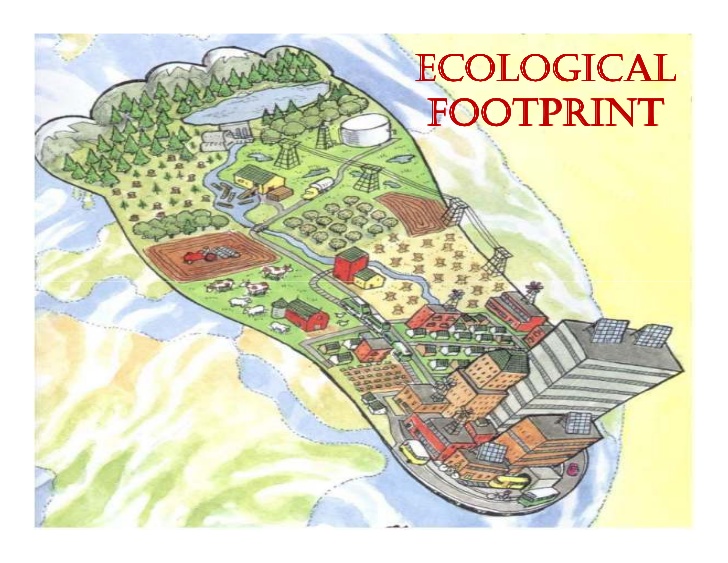
IS YOUR LIFESTYLE SUSTAINABLE?
Ecological Footprint refers to the environmental impact of human society on Earths natural systems; the footprint is a scientific measurement of the human-caused disruption to the balance-of-nature. It is a method to determine the degree of degradation that people have caused based on "how fast we consume resources and generate waste" as compared to "how fast nature can absorb our waste and generate new resources". In other words, everyday we humans use up a ton of resources and we produce a ton of waste. Our eco-footprint compares our annual resource use to the Earth’s ability to produce our necessary annual resources, and then to absorb the waste we create after turning the resources into products.
The Global Footprint Network has taken the concept of eco-footprint into the realm of science by precisely calculating the eco-footprint of individuals, states, and nations and then deriving the total Global Footprint. This work, by Mathis Wackernagel and William Rees, has become the industry standard in the fight against climate change.
Their calculations are based on a supply and demand model where bio-capacity, the amount of productive land resources available nationally, is the supply; vs the Footprint, the amount of pressure put on the land to supply the population with the necessary resources. The Global Footprint Network site also has a handy Footprint Calculator where individuals can determine their personal footprint. It then offers methods to reduce personal footprints, and opportunities to purchase carbon offsets which can effectively reduce personal footprint to zero, which is what is needed.....for everyone.....before we hit 1.5 degrees above average.
SUSTAINABLE EARTH
In the final calculation the Global Footprint uses one Earth as a basis for footprint calculation by asking the question, how many Earth’s are required to fulfill the consumption requirements of the global population each year? The Earth is considered sustainable if the Footprint is equal to or less than 1 Earth annually; Earth has enough resources to supply the global population.
If the Earth population consumes more resources than the Earth can naturally generate each year, then we are degrading Earth natural systems in order to fulfil our consumption needs, which, over time, leads to the Earth's degradation and is the cause of our climate change, habitat loss and mass extinction global crisis that we are now facing.
Do each of us ask more of Mother Nature then she can provide?
1973 was the last year of Global sustainability where the demands on resources where equal to Earth’s capacity. Since then, society has continually demanded more of the Earth than the Earth can produce. As of 2020, according to Global Footprint Network, humans require the resources of 1.7 Earths annually.
Earth Overshoot Day is the day, as meticulously calculated by the Global Footprint Network, when Earth’s available resources, for that particular year, are used up. Since 1973 society is running a greater and greater resource deficit, which means Earth Overshoot Day has been moving backwards until now in 2020 where the date is Aug 22. Overshoot Day gives people a clear indication about what is needed for society to get back to a sustainable existence. In 1971 Earth "overshoot day" was December 21st.
Earth's resource budget is a result of 3.7 billion years of evolution to develop the complex system we conveniently call "nature", of which homo-sapiens only occupy approximately 4.2 million years. This incredible evolutionary system follows patterns of the chemical interchange of sunlight, air, water, and land/soil which miraculously created and maintains "life", and all it's diversity. Science predicts there are 8.7 billion biodiverse species on Earth, of which only 1.2 million are known.
It is impossible to ever know the myriad of countless interactions at play in the natural world. Nature is far to complex for any computer to ever model. Each field of science reveals only a fraction of nature, and no field of science can pretend to understand nature's vast complexity. In other words, the word "nature" is a symbol for an infinite number of unknowable chemical and physical interactions that makes up all-that-is in the world.....including us.
Science uses the term bio-capacity to describe Earth's renewable resource budget. Bio-capacity of a country, a region or of the entire Earth is the amount of nature's resources available to society for survival; food, clothing, shelter; which includes cropland, forest land, fishing grounds, etc.
The Earth, which was once thought to have infinite resources, has very rapidly become extremely finite, (in just 50 years) due to population growth, increased average income, highly sophisticated resource extraction technology, multi-national globalization giving rise to a global economy. Because there are no controls on over-extraction, each year there's a resource deficit which is unsustainable as extraction continuously exceeds replenishment.
Our bio-capacity, the resources available as inputs to society, minus the extracts from the earth that humans take to operate society, determines sustainability. If this is a balanced equation where the input is greater than or equal to the output than we are living in a sustainable society. But if we deplete resources faster than the Earth can replace them, for example fish stocks or trees, then our societies becomes unsustainable, and society will have to suffer the dire consequences.
Sustainable Society: Earth resource input >= resource extraction
Unsustainable Society: Earth resource input < resource extraction
It is sustainable because there is always enough supply to meet the demand year after year or unsustainable because the supply diminishes due to constant overharvesting resulting in an eventual collapse of the renewable resource.
EARTH RESOURCE BUDGET
Earth's resource budget is akin to one's own personal financial budget. You set a budget with defined goals and objectives but then completely ignore it, spending it on frivolous non-essentials, and then wonder why there is no money for food at the end of each month. What is paradoxically very strange is that humans generally consider themselves to be the most intelligent creature to exist in the universe. While we seem to be able to figure out some highly sophisticated problems, like the age of the universe, we're at a loss to consider how much of Earths renewable resources we are allowed to use each year.
EARTH AS A BENCHMARK
As the 21st Century unfolds, new discoveries in science and technology continue at an unprecedented rate. However, in the face of a global crisis there is one important question to ask of all technology and science. How does this technology effect the Earth? Is it beneficial, neutral, or harmful to the environment? Society can no longer afford further toxic degradation of Earth systems. Science dictates that nothing good can come from further human inflicted alteration of the balance of nature.
The question of "sustainability" is becoming more and more important with each passing year as the global crisis worsens. Millions of people are looking for ways of reducing their ecological footprint and walking lighter on the Earth in the aftermath of excessive flooding, hurricanes & tornados, and wildfires causing massive destruction, loss of property and death. Scientists predict ever worsening consequences as the climate continues to rise.
Through education and learning about levels of impacts, people are also lobbying their governments to implement new strategies for environmental protection.
HOW MUCH ENVIRONMENTAL COLLAPSE WILL IT TAKE TO CHANGE
Up to the end of the 19th Century the global economy was experiencing limitless growth due to the Capitalist model of continuous economic growth based on limitless resources. While Capitalism is great for growing an economy, what happens when the infinite supply of resources suddenly becomes limited.
Unfortunately the Capitalist model doesn't work, at least not in its present form as countless, once healthy renewable resources such as fisheries and forestry are in collapse. Yet as one collapses another is brought to replace it and the model of extraction continues in the face of climate chaos and on the backs of massive species extinction. How can this be?
One must look to the bases of our man-made systems and ask some very deep questions.....such as.....Is our economic system, our legal system and our system of governance out of touch with our continuous existence on planet Earth?
These are long entrenched institutions which have slowly been eroded from their original purpose to benefit those people who control them. This is not a new phenomena, it is human nature at work. Humans, like any species, function within the bounds of their evolutionary history.
Since humans are not about to change, that just leaves the systems themselves in need of corrections. These corrections, as history dictates, are generally brought by the people.....as it is the people who generally suffer the consequences of a system gone awry, i.e. the fugal system.
It's is a difficult question, but one where the time for contemplation is over and the time to act is well upon us. It's go time for all levels of society, from the individual person, through all regional, municipal, national and international organizations, involving all matter of science and technology, with the proper funding. It's time to stop with all the rhetoric and start solving the energy problems and stop increasing our Green House Gas (GHG) inputs.
What is critical to promote the necessary changes is the will of society. If we each ask this important question about what we can do to reduce our personal footprint, then our actions will contribute to a movement that will grow exponentially.
Government and corporations must eventually respond to the will of the people. For example, if people stop buying clothing made from synthetic and highly toxic textiles, manufacturers will change and create the same beautiful designs using natural fiber which is compostable. Rather than the global trade in cheap clothing as a result of exploiting cheap labour in developing countries, regional textile companies can support small scale regional manufacturing saving on transport GHGs as well.
There are many ways to reduce your impact on the Earth: by reducing water consumption, eating less meat, driving less......the list is endless and any google search will come up with a multitude of ideas......what is required is the will.
Once the personal will to change is realized, the process becomes natural, energizing and deeply rewarding. It is as if by caring about, and doing something good for the Earth, that you are also doing something good for humanity......and doing something good for yourself......and your kids......and their future kids. It can be a highly positive and rewarding experience.
Hemp is one of the ways a person can reduce their footprint. There is something very positive about using products that come from the earth and will return to the earth when discarded. This feeling using natural products goes even beyond the practical good feeling of lowering your footprint. It boarders on the spiritual aspect of the self and the connection to nature and to the cultures of the past as all coming from the same place, and all being from one source.
This is essentially why HempNetMarket was created. To offer an alternative to those who have made the important decision to reduce their footprint and step lighter on our life support system. When you wear hemp, eat hemp, bath with hemp, heal with hemp, drive hemp cars, use hemp twine and rope, etc. well you can accomplish most of what you do now but with the assurance that you're not contributing to our global environmental crisis.
The Carbon Nitty Gritty - How It Works
The element carbon (c) is the "building block of life" because, like the main lego block, all other chemical elements attach to carbon to make the molecules needed for life to exist. Photosynthesis is a magical chemical process where plants cells use sunlight energy to convert water (H20) and carbon dioxide (CO2) into food (C6H12O6). Food for themselves and all other living things. So the carbon in water and the carbon in carbon dioxide are converted into oxygen and sugar. All animals depend on plant oxygen to breath and sugar to eat.....it's no wonder we love plants, we would literally be nothing without them.
Animals cells use the plant oxygen and sugar in another magical chemical process called "respiration" and turn it into energy and carbon
Every man-made product is made from plants one of three categories when it comes to the carbon footprint.
1. Carbon negative - This product is a carbon sink because it has removed carbon from the air. into the hemp plant cells, then into the product, and stores it there forever. Hempcrete, which is a type of hemp cement is a perfect building wall and brick material to store away vast amounts of carbon into a highly insulted, and breathable wall system.
2. Carbon neutral - Is a product that removes carbon from the atmosphere for a period of time and then the same amount of carbon is returned to the air through combustion or by biodegrading.
3. Carbon positive - Worst case which causes climate chaos as this product adds carbon to the air which happens when carbon rich fossils burred underground for millions of years, i.e. oil & gas deposits, are brought to the surface and made into products and the carbon is then released into the air through combustion or biodegrading.
Hemp products are either carbon negative, in products such as hempcrete, or carbon neutral because all hemp products are made by removing carbon from the air to grow the hemp plant prior to the making of the product. Petroleum products can only be carbon positive because they are made using fossil carbon from underground oil deposits.
By simply purchasing products made from hemp or other natural materials a person can dramatically reduce their carbon footprint and assist in the fight against pollution and climate change.
Carbon Storage
Hemp products are produced from the flowers, fiber and seeds of the plant Cannabis sativa L. These products are eco-friendly and sustainable because the hemp plant has taken carbon (C) out of the atmosphere as carbon dioxide (CO2) and transformed it through photosynthesis into cellular carbon and oxygen (02). The oxygen is then released back into the air and the carbon, the building block of all organic material, is incorporated into the plant cells.
span cache="color:#000000;" data-redactor-span="true" data-redactor-style-cache="font-family:verdana, geneva, sans-serif;font-size:12pt;"span cache="color:#000000;">hemp plant cells is then integerated into hemp products where the carbon remains stored for the life of the product. Hemp plants are a perfect, all natural, carbon storage devise and, due to it's extremely fast growth, huge biomass, and super strong fiber, which is made into 1000's of products, is the best plant for the job of shifting to eco-friendly bio-products.
Carbon Negative or Carbon Neutral
>span cache="font-family:tahoma, arial, helvetica, sans-serif;font-size:12pt;" data-redactor-span="true" data-redactor-style-cache="font-family:verdana, geneva, sans-serif;font-size:12pt;"
>span cache="font-family:tahoma, arial, helvetica, sans-serif;font-size:12pt;">Carbon from Fossil Fuels and Petroleum
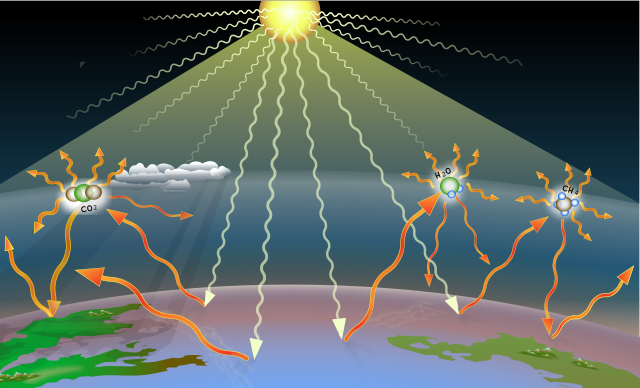
Now the opposite can be said for any product produced from fossil fuel and petroleum such as nylon, rayon, or anything synthetic, petroleum diesel and gas etc. To make these products, carbon that was stored away for millions of years in oil deposits, is brought to the surface, then either burned for energy or made into petroleum or plastic products. This process releases billions of tons of carbon into the air each year. This is the cause of climate change.
Recyclable Carbon
Hemp fiber is one of the longest and strongest natural fibers produced by nature and the reason why rope has been made from hemp for thousands of years. This strength however has another important factor in solving climate change.....it is super-recyclable. For example, hemp paper can be recycled 10 -12 times as opposed to 2-3 times for paper made from wood. This means that many hemp products like rope, burlap etc. can easily recycled and made into new products.
Biodegradable Carbon- Fighting Global Pollution
While hemp products don't contribute carbon to the atmosphere there is another equally important fact that makes hemp an important factor in fighting global plastic pollution and micro-plastics. This is the simple fact that hemp is biodegradable and plastic is not, meaning that when it comes time for hemp products to degrade, micro-organisms can biodegrade hemp into it's raw components where they are ready to be used again to grow more hemp.
Hemp E-Commerce Community Marketplace
Hemp Business Advertising, Sales and Marketing Platform
Hemp Earth Friendly Bio-products, Supporting a Local Circular Bio-Economy

